Prefabricated Glass Fused Steel Tank Bio Gas Digester
Prefabricated Glass Fused Steel Tank
Bio Gas Digester
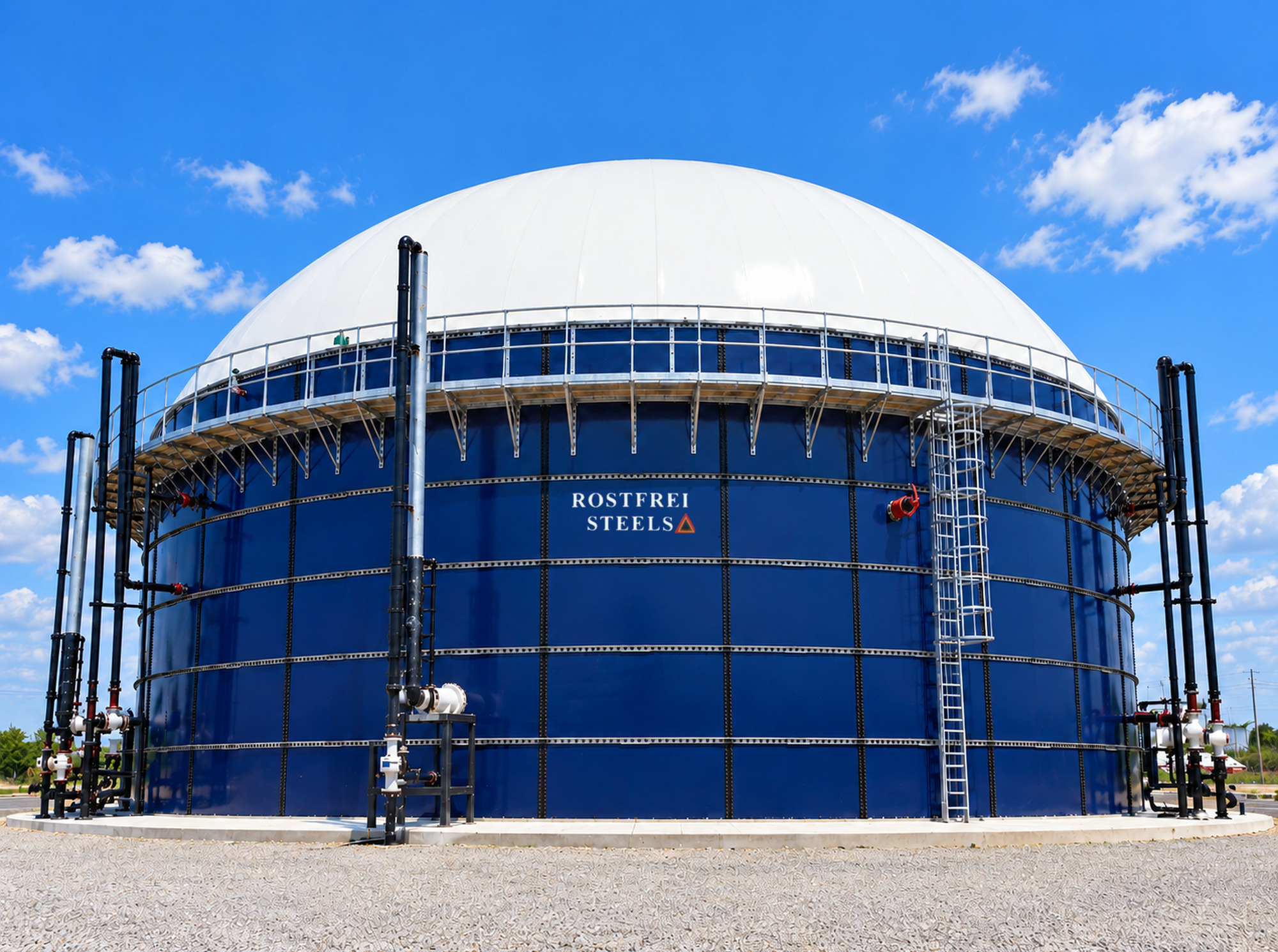
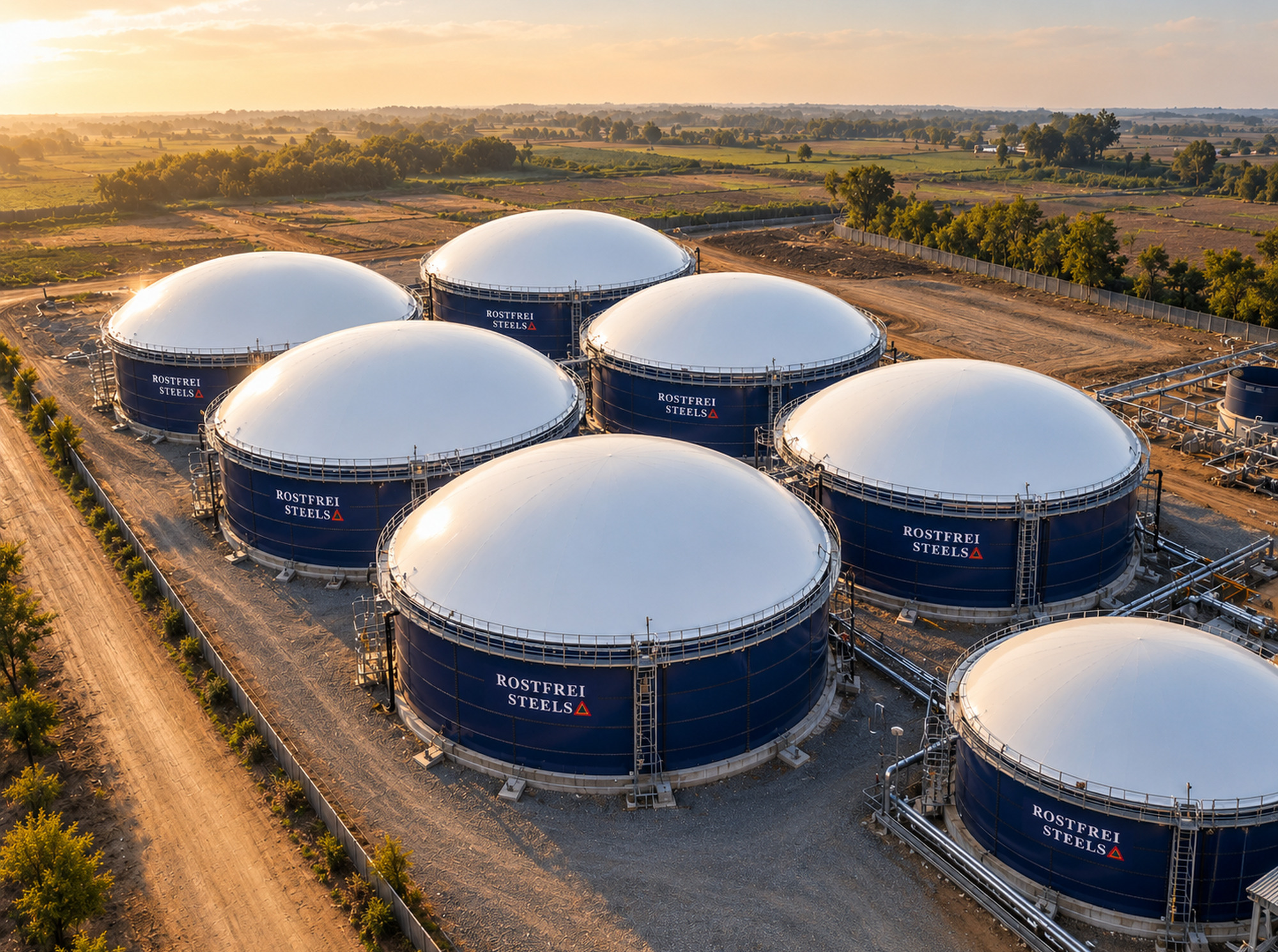
Rostfrei Steels offers prefabricated bolted tanks for Biogas and Bio-CBG projects, engineered for the efficient storage and anaerobic digestion of organic waste. These tanks provide a reliable containment solution for converting agricultural waste, food waste, sewage sludge, and other biodegradable materials into renewable biogas.
This process yields a gas primarily composed of methane (CH₄), carbon dioxide (CO₂), and hydrogen sulphide (H₂S).
The biogas produced can be utilized in a range of applications, such as:
Design Standards
AWWA D103: This standard is published by the American Water Works Association (AWWA) and provides guidelines for the design, construction, and inspection of bolted steel tanks for water storage.
Two Tank Options for Biogas Applications
Glass-Fused-to-Steel (GFS) Tanks
Featuring a premium glass enamel coating fused to steel at high temperatures, GFS tanks offer excellent corrosion resistance and a highly durable, inert surface suitable for demanding biogas environments.
Fusion Bonded Epoxy (FBE) Tanks
Rostfrei also offers FBE-coated bolted tanks, providing a robust and cost-effective solution with high corrosion resistance for various biogas and wastewater applications.
With both GFS and FBE tank options, Rostfrei Steels can provide the most suitable storage and digestion solution based on project requirements, operating conditions, and commercial considerations.
Anaerobic Digestion Process
Biogas is primarily produced through anaerobic digestion, a biological process in which microorganisms break down organic matter in the absence of oxygen. The process generates biogas and digestate, converting organic waste into a valuable source of renewable energy.
Mesophilic Digestion
Commonly used for stable and efficient biogas production.
Thermophilic Digestion
Offers faster digestion rates and higher biogas production potential under controlled operating conditions.
Aerobic Treatment
Aerobic biological treatment takes place in the presence of oxygen
and is primarily used for the treatment of
organic waste and wastewater. Unlike anaerobic digestion, it does not produce biogas
as the primary energy product.
Process and Technology
Process and Technology
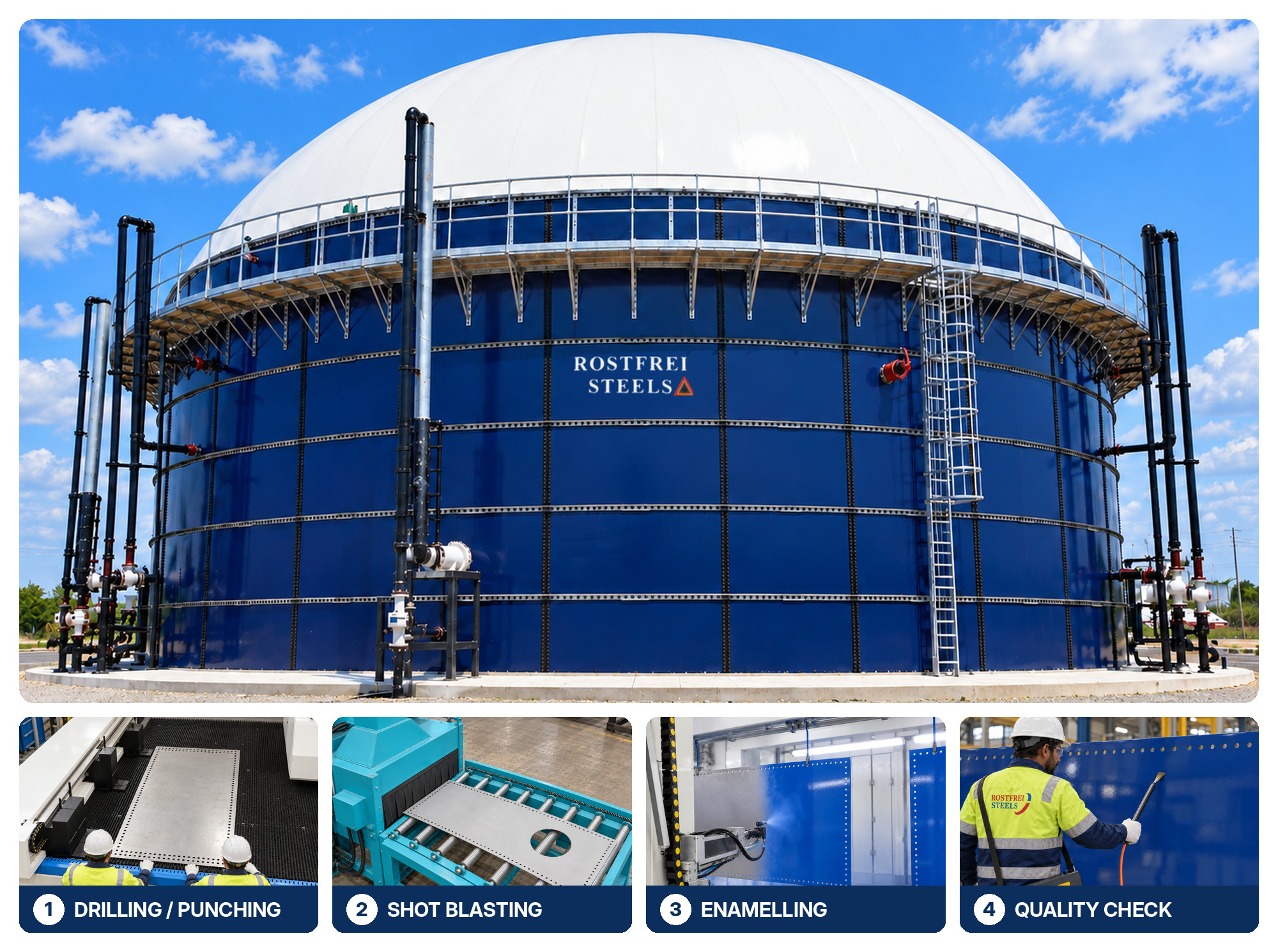
A brief process of creating Glass-Fused-to-Steel (GFS) tanks involves several precise steps to ensure the quality and integrity of the finished product.
Installation Process
Modular top-to-bottom assembly supports a controlled sequence from structural build-up through final anchoring.
A. Top-to-Bottom Assembly
- Start by assembling the top ring and roof.
- Use jacks to lift the structure.
- Add subsequent rings from the top down by bolting them beneath the existing assembly.
B. Adding Rings & Accessories
- Continue ring installation, progressively adding new rings at the bottom as the structure is lifted.
- Install ladders, manholes, nozzles, and other accessories based on the tank design and layout.
C. Anchoring
- After full assembly, anchor the tank to the foundation.
- Use J-bolts or chemical fasteners to ensure structural stability and resistance to uplift or lateral loads.
Types of Roofs We Offer
GFS Fixed Leakproof Roof
Double Membrane Roof
Material Codes
Quality Check
Key Advantages of Rostfrei’s GFS Tanks
Key Advantages of Rostfrei’s GFS Tanks
Applications of GFS Biogas Digester Tanks
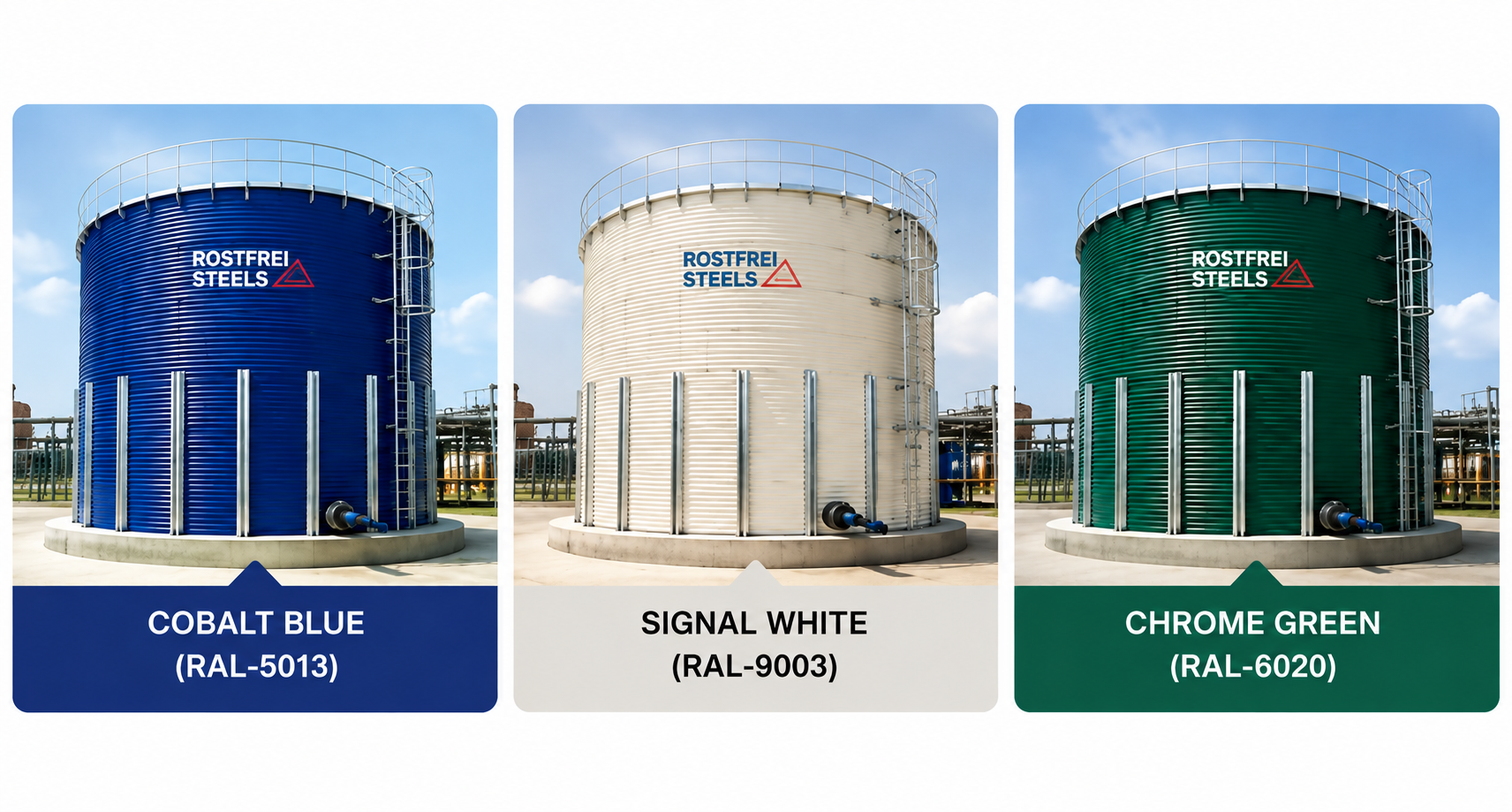
Color Options Available
Color Options Available
Rostfrei GFS tanks are available in multiple aesthetically appealing colour finishes.
Need a Customized Quote?
Looking for tailored industrial storage solutions or specific product pricing? Get in touch with our expert engineering team for a detailed proposal.
GET A QUOTE